
Tech
Sankkucomplex: Modern Tech Framework for Developers


Introduction
The technology landscape keeps evolving, and developers constantly search for frameworks that handle complexity without creating more problems than they solve. That’s where sankkucomplex enters the conversation—a conceptual approach to building modular, scalable systems that manage intricate dependencies while maintaining clean architecture. Whether you’re building microservices, handling state management, or designing distributed systems, understanding this framework can transform how you approach complex technical challenges. Let’s break down what makes sankkucomplex relevant in modern development, how it differs from traditional approaches, and practical ways you can leverage its principles in your projects.
Understanding the Sankkucomplex Framework
At its core, sankkucomplex represents a methodology for handling complex system architectures through layered abstraction and modular design. The name itself suggests managing complexity (“complex”) through structured systems (“sankku” implying systematic organization). This framework emerged from the recognition that modern applications face unprecedented complexity—multiple data sources, various API integrations, real-time requirements, and demanding scalability needs.
Traditional monolithic architectures buckle under this complexity. You’ve probably experienced the pain: changing one component breaks three others, testing becomes nightmarish, and deploying updates feels like defusing a bomb. The sankkucomplex approach tackles these problems by treating complexity as something to be organized rather than eliminated.
The framework operates on several key principles. First, it emphasizes explicit dependency mapping—every component knows exactly what it needs and provides. Second, it promotes bounded contexts where different parts of your system can evolve independently. Third, it advocates for complexity isolation, ensuring that intricate logic stays contained and doesn’t leak across boundaries.
Core Architecture Principles
Modular Component Design
The sankkucomplex framework treats applications as ecosystems of independent modules rather than tightly coupled systems. Each module handles specific functionality and communicates through well-defined interfaces. This isn’t just theoretical—think about how Netflix’s microservices architecture works, where recommendation engines, streaming services, and user management operate independently but coordinate seamlessly.
Key modular principles include:
- Single responsibility: Each module does one thing exceptionally well
- Clear interfaces: Communication happens through documented APIs or contracts
- Independent deployment: Modules can be updated without touching others
- Technology agnostic: Different modules can use different tech stacks when appropriate
This modularity means a payment processing module in your e-commerce platform can be completely rewritten from Python to Node.js without affecting your product catalog or user authentication systems.
Complexity Layers and Abstraction
Sankkucomplex introduces the concept of complexity layers—organized tiers that handle different levels of system intricacy. The bottom layer deals with raw complexity (database operations, external API calls, complex algorithms), while upper layers present simplified interfaces for application logic.
Imagine building a financial analytics platform. Your bottom complexity layer handles intricate calculations, real-time data streams from multiple exchanges, and statistical modeling. The middle layer provides clean abstractions like “calculatePortfolioRisk()” or “getMarketTrend().” The top layer—what developers actually work with—uses these simple methods without understanding the mathematical complexity underneath.
This layered approach prevents complexity from spreading like a virus through your codebase. When complexity stays isolated in designated layers, the rest of your application remains clean and maintainable.
Dynamic Dependency Resolution
One of sankkucomplex’s most powerful features is intelligent dependency management. Traditional dependency injection is static—you define dependencies at compile time. The sankkucomplex framework supports dynamic resolution, allowing systems to adapt based on runtime conditions, available resources, or configuration changes.
Consider a content delivery system that needs to process images. In development, it might use a simple local library. In production, it dynamically switches to a cloud-based service for better performance. During high-traffic periods, it might switch to a cached version to reduce load. The application logic doesn’t change—the framework handles these transitions intelligently.
Practical Implementation Strategies
Starting with Domain Modeling
Implementing sankkucomplex begins with thorough domain modeling. You need to understand your system’s natural boundaries before you can effectively modularize it. This means identifying distinct business domains, understanding their relationships, and mapping out data flows.
Let’s use a practical example: building a food delivery platform. Your domains might include:
- User management: Authentication, profiles, preferences
- Restaurant operations: Menus, availability, ordering
- Delivery logistics: Driver assignment, route optimization, tracking
- Payment processing: Transactions, refunds, wallet management
- Notification system: Order updates, promotional messages
Each domain becomes a bounded context in the sankkucomplex framework, with clear responsibilities and limited coupling to other domains.
Building Communication Bridges
Once you’ve identified modules, you need robust communication mechanisms. The sankkucomplex approach favors event-driven architecture for loose coupling combined with synchronous APIs where immediate responses are necessary.
Effective communication patterns:
- Event buses: Modules publish events when something happens; interested parties subscribe
- Message queues: Asynchronous processing for non-critical operations
- API gateways: Unified entry points that route requests to appropriate services
- Service mesh: Infrastructure layer handling service-to-service communication
Using our food delivery example, when an order is placed, the order service publishes an “OrderPlaced” event. The restaurant system, payment processor, and notification service all react independently—no tight coupling required.
Managing State Complexity
State management becomes exponentially harder as systems grow. Sankkucomplex addresses this through distributed state patterns and clear ownership principles. Each module owns its state completely—no shared databases that create hidden dependencies.
State management strategies:
- Event sourcing: Store events that led to current state rather than just the state itself
- CQRS patterns: Separate read and write models for different optimization
- Eventual consistency: Accept that distributed systems won’t be instantly consistent
- State machines: Explicitly model valid state transitions to prevent corruption
This approach means debugging becomes easier because you can trace exactly how state evolved over time, and you avoid the nightmare scenarios where one module accidentally corrupts another’s data.
Performance Optimization in Complex Systems
The sankkucomplex framework recognizes that complexity and performance often conflict. The solution isn’t choosing one over the other but implementing intelligent optimization strategies that preserve modular architecture while achieving necessary speed.
Caching Strategies Across Layers
Implement caching at multiple levels within your complexity layers. Lower layers might cache expensive database queries or API calls. Middle layers cache computed results from complex algorithms. Upper layers cache frequently accessed application data. This multi-tier caching means each layer optimizes independently without compromising the overall architecture.
Asynchronous Processing
Not everything needs immediate results. The sankkucomplex approach embraces asynchronous operations for non-critical paths. User uploads a profile photo? Process it asynchronously. Analytics calculations? Run them in the background. This keeps user-facing operations fast while handling complex processing efficiently.
Strategic Resource Allocation
Different modules have different resource needs. Your image processing service might be CPU-intensive, while your API gateway is network-bound. The framework supports independent scaling—allocate resources based on actual module requirements rather than scaling everything uniformly.
Testing Complex Systems
Testing applications built on sankkucomplex principles requires a layered testing strategy that matches your architectural layers.
Testing pyramid for complex systems:
- Unit tests: Test individual module logic in isolation
- Integration tests: Verify modules communicate correctly
- Contract tests: Ensure API contracts between services remain stable
- End-to-end tests: Validate complete user workflows
- Chaos engineering: Deliberately break things to verify resilience
The modular nature actually makes testing easier—you can test each module independently with mocked dependencies, then gradually work up to full system tests.
Real-World Applications
The sankkucomplex framework principles appear across successful modern applications, even if they don’t use that specific name. Spotify’s microservices architecture handling millions of streams? That’s complexity management in action. Uber’s system coordinating drivers, riders, and routes globally? Perfect example of bounded contexts and event-driven communication.
E-commerce giants like Amazon demonstrate these principles at massive scale—product catalogs, recommendation engines, inventory management, and order fulfillment all operate as independent but coordinated systems. They’ve proven that properly managed complexity enables rather than hinders innovation.
Common Pitfalls and How to Avoid Them
Over-modularization: Breaking everything into tiny pieces creates its own complexity. Find the right granularity for your actual needs, not theoretical purity.
Premature abstraction: Don’t implement complex patterns until you need them. Start simple and refactor toward complexity layers as actual complexity emerges.
Ignoring operational complexity: Beautiful architecture means nothing if you can’t deploy, monitor, or debug it in production. Build operational concerns into your framework from the start.
Communication overhead: Too many service calls create latency and failure points. Sometimes it’s okay to duplicate small amounts of data rather than making constant cross-service calls.
Getting Started with Sankkucomplex
Begin by identifying the most complex parts of your current system—the areas that cause the most bugs, take longest to modify, or create the most deployment anxiety. Apply sankkucomplex principles to these pain points first rather than rewriting your entire application.
Document your module boundaries explicitly. Create architecture diagrams showing how components communicate. Write down the contracts between services. This documentation becomes invaluable as your team grows and new developers need to understand the system.
Invest in good observability tools early. Complex systems need comprehensive monitoring, logging, and tracing to debug effectively. Tools like distributed tracing help you follow requests across multiple services and identify bottlenecks or failures.
The sankkucomplex framework isn’t a silver bullet, but it provides a thoughtful approach to managing inevitable complexity in modern applications. By organizing rather than fighting complexity, you build systems that scale, adapt, and remain maintainable as requirements evolve. Whether you’re starting a new project or refactoring an existing one, these principles offer a path toward more sustainable software architecture.
Introduction
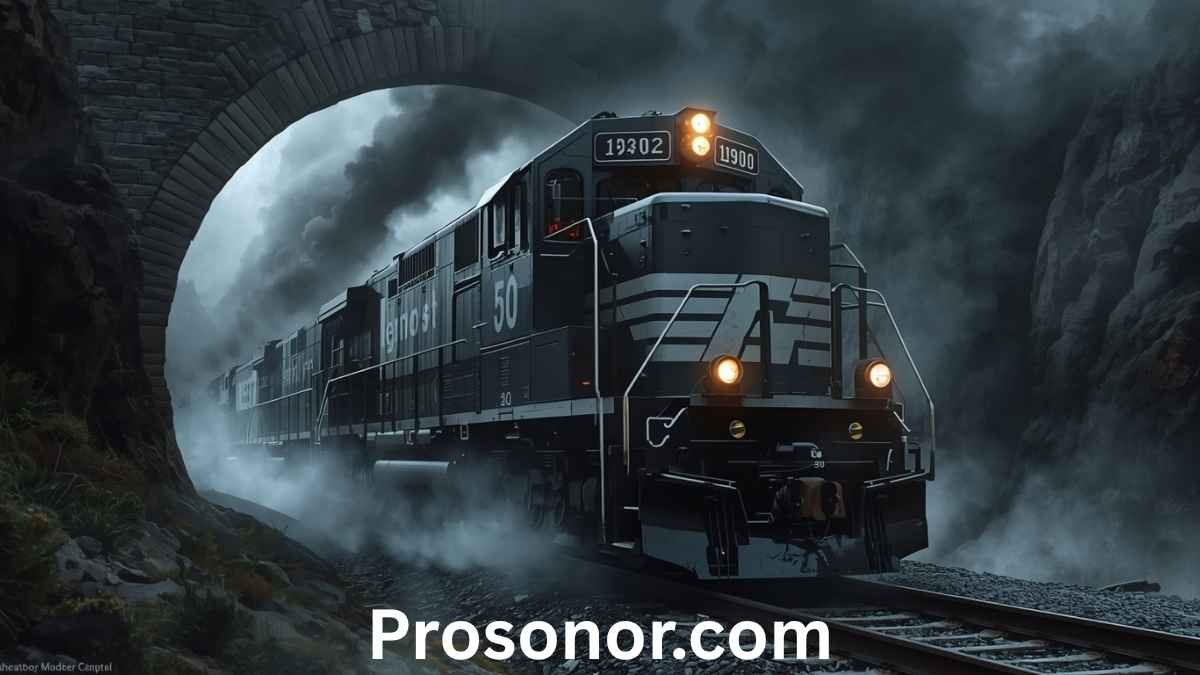
The term Cloaked Ghost SD70MAC has captured the imagination of railfans, engineers, and curious readers alike. It sounds mysterious, almost like something out of a sci-fi story, but it actually refers to a fascinating concept rooted in real-world locomotive technology and railroad culture. Combining the rugged performance of the SD70MAC with the idea of a “ghost” or hidden identity, this keyword has become increasingly popular among train enthusiasts and online communities.
In this detailed guide, we’ll explore what the Cloaked Ghost SD70MAC really means, where it comes from, and why it has gained such a strong following. Whether you’re a seasoned railfan or just discovering this term, this article will give you a complete understanding in a clear, engaging, and expert tone.
What is the Cloaked Ghost SD70MAC?
The Cloaked Ghost SD70MAC is not an official model name but rather a nickname or concept used by rail enthusiasts to describe certain locomotives from the SD70MAC series that appear “hidden,” repainted, or operating under unusual circumstances.
The itself is a powerful diesel-electric locomotive known for its high horsepower and durability. Built primarily in the 1990s and early 2000s, it became a favorite among major railroads for heavy freight operations. However, when these locomotives are repainted, stripped of markings, or operate without clear identification, they can take on a mysterious “ghost-like” presence.
The term “cloaked ghost” comes from this visual and operational ambiguity. A locomotive that lacks clear branding or appears in a faded or unusual paint scheme can look almost invisible in plain sight—hence the idea of being “cloaked.”
The Origins of the SD70MAC
The SD70MAC was developed as part of a new generation of locomotives designed to meet the growing demands of freight transportation. introduced this model as an upgrade over earlier SD60 and SD70 units, offering more power and improved efficiency.
One of the defining features of the SD70MAC is its AC traction motors. These motors provide better performance under heavy loads and in difficult conditions, making the locomotive ideal for hauling long freight trains across challenging terrains. This technological advancement set it apart from many of its predecessors.
Railroads such as and widely adopted the SD70MAC, further cementing its reputation as a reliable workhorse. Over time, these locomotives became iconic in the rail industry.
Why the “Cloaked Ghost” Concept Exists
Hidden Identities and Repaints
One of the main reasons behind the Cloaked Ghost concept is the practice of repainting locomotives. When ownership changes or railroads merge, locomotives are often repainted to reflect new branding. During this transition period, some engines may run with partial paint jobs or no markings at all.
These in-between states can make the locomotive look unusual or even anonymous. For railfans, spotting such a unit feels like discovering something rare and mysterious, which contributes to the “ghost” narrative.
Additionally, some locomotives are intentionally left in neutral or primer paint schemes for testing or leasing purposes. These units often lack logos or identifying features, making them appear “cloaked.”
Leasing and Transfer Operations
Another factor that contributes to the Cloaked Ghost phenomenon is locomotive leasing. Companies frequently lease locomotives to different railroads, and during these transitions, the engines may operate without clear branding.
Leased SD70MAC units might travel across various regions, appearing in unexpected locations. This unpredictability adds to their mystique, as railfans never know when or where a “ghost” unit might appear.
Transfer operations also play a role. When locomotives are moved between facilities, they may not carry their usual identifiers, further enhancing the cloaked appearance.
Weathering and Wear
Over time, locomotives are exposed to harsh environmental conditions. Paint fades, logos wear off, and surfaces become covered in dirt and grime. This natural aging process can give an SD70MAC a ghostly, almost abandoned look.
For some enthusiasts, heavily weathered locomotives are even more fascinating than freshly painted ones. The worn appearance tells a story of years of service and adds character to the machine.
In certain lighting conditions—such as fog, dusk, or nighttime—these weathered units can look especially eerie, perfectly fitting the “ghost” description.
Performance and Power of the SD70MAC
Engine and Horsepower
The SD70MAC is equipped with a powerful diesel engine capable of producing around 4,000 horsepower. This makes it suitable for hauling heavy freight trains over long distances.
The combination of high horsepower and AC traction allows the locomotive to maintain strong performance even under challenging conditions. This reliability is one of the reasons it remains in service decades after its introduction.
Despite its age, the SD70MAC continues to be a valuable asset for many railroads, proving that good engineering stands the test of time.
Advanced Traction Technology
One of the standout features of the SD70MAC is its AC traction system. Unlike older DC systems, AC traction provides better control and efficiency, especially when starting heavy loads.
This technology reduces wheel slip and improves overall performance, making it ideal for mountainous routes and long freight trains. It also contributes to lower maintenance costs over time.
The advanced traction system is a key reason why the SD70MAC remains relevant in modern rail operations.
Durability and Longevity
The SD70MAC is known for its durability. Built to withstand tough conditions, these locomotives can operate for decades with proper maintenance.
Many units have been rebuilt or upgraded, extending their lifespan even further. This longevity adds to the legend of the Cloaked Ghost SD70MAC, as older units continue to appear in unexpected places.
The Cultural Impact Among Railfans
A Symbol of Mystery
The Cloaked Ghost SD70MAC has become a symbol of mystery within the railfan community. Spotting one is often considered a special event, especially if the locomotive has an unusual appearance.
Railfans frequently share photos and stories of these sightings online, contributing to the growing popularity of the term. Each sighting adds to the lore and keeps the mystery alive.
This sense of discovery is a big part of what makes railfanning so enjoyable.
Social Media and Online Communities
Platforms like forums and social media have played a significant role in spreading the Cloaked Ghost concept. Enthusiasts from around the world share their experiences, creating a global community.
Photos of cloaked or ghost-like SD70MAC units often go viral, attracting attention from both fans and casual observers. This online presence has helped turn a niche idea into a widely recognized trend.
The digital age has made it easier than ever to connect with other railfans and share discoveries.
Inspiration for Creativity
The mysterious nature of the Cloaked Ghost SD70MAC has inspired creative works, including photography, art, and storytelling. Some enthusiasts even create fictional backstories for these locomotives.
This blend of reality and imagination adds another layer of appeal. It shows how a simple concept can spark creativity and bring people together.
For many, the Cloaked Ghost is more than just a locomotive—it’s a source of inspiration.
Challenges and Misconceptions
While the Cloaked Ghost SD70MAC is an exciting concept, it’s important to separate fact from fiction. These locomotives are not actually invisible or supernatural—they simply appear unusual due to real-world factors.
Some people may misunderstand the term and expect something more dramatic. In reality, the “ghost” aspect is purely visual and symbolic.
Understanding this helps maintain a balanced perspective while still appreciating the mystery and excitement.
The Future of the SD70MAC and the Cloaked Ghost Trend
As railroads continue to modernize their fleets, older SD70MAC units may gradually be replaced or upgraded. However, many are still in service and likely will be for years to come.
The Cloaked Ghost concept is also expected to evolve. As long as locomotives continue to be repainted, leased, and weathered, there will always be opportunities for “ghost” sightings.
In the future, this trend may even expand to other locomotive models, keeping the spirit of the Cloaked Ghost alive.
Conclusion
The Cloaked Ghost SD70MAC is a perfect example of how real-world technology can inspire mystery and fascination. While the SD70MAC itself is a powerful and reliable locomotive, the “cloaked ghost” concept adds an extra layer of intrigue that captures the imagination.
From repainting and leasing to weathering and unexpected sightings, many factors contribute to this phenomenon. Together, they create a unique blend of reality and storytelling that continues to engage railfans around the world.


Global Leadership in Lithium Battery Manufacturing
MANLY has positioned itself as a leading LiFePO4 lithium battery manufacturer and exporter, supplying high-performance wholesale lithium batteries to clients across multiple continents. Their products cater to a wide range of applications, including renewable energy storage, electric vehicles, industrial machinery, marine systems, and UPS solutions. MANLY’s commitment to quality, reliability, and innovation ensures that each battery meets international standards and performs consistently, making them a trusted choice for businesses seeking durable and efficient energy storage solutions.
Advanced Production Techniques
The company leverages cutting-edge production technology to deliver lithium battery replacement units with consistent quality and performance. Automated assembly lines, precision cell integration, and rigorous testing protocols ensure that each battery maintains optimal voltage, thermal stability, and capacity. These manufacturing processes guarantee that wholesale lithium batteries meet strict international safety and performance standards while allowing for high-volume production without compromising reliability or quality.
Customizable Solutions for Diverse Applications
MANLY Battery provides tailored solutions to meet the specific needs of OEMs, industrial clients, and commercial enterprises. Customers can request wholesale lithium batteries with customized voltages, capacities, and form factors, enabling seamless integration into solar energy systems, electric vehicles, industrial machinery, and UPS systems. By offering highly flexible battery configurations, MANLY ensures that clients achieve optimal energy efficiency, reduced operational downtime, and enhanced system performance.
Emphasis on Safety and Battery Management
Safety is a core priority in MANLY’s manufacturing process. Each lithium battery replacement is equipped with a smart battery management system (BMS) to prevent overcharging, over-discharging, short circuits, and thermal fluctuations. Batteries also undergo rigorous testing, including cycle life and extreme temperature evaluations, to ensure reliable operation under challenging conditions. This focus on safety provides clients with confidence that their energy systems are protected and perform consistently across all applications.
Long Lifespan and Operational Efficiency
MANLY’s LiFePO4 batteries are engineered for longevity, reducing the frequency of lithium battery replacement and minimizing maintenance costs. High-quality wholesale lithium batteries deliver consistent energy output over thousands of cycles, ensuring uninterrupted power for industrial machinery, renewable energy systems, electric vehicles, marine vessels, and UPS applications. This durability translates into reduced downtime, enhanced productivity, and significant long-term savings for businesses relying on reliable energy storage.
Environmentally Responsible Manufacturing
Sustainability is a central principle at MANLY Battery. The company employs responsibly sourced materials, energy-efficient production methods, and recycling initiatives to minimize environmental impact. Even lithium battery replacement units are produced with eco-conscious practices, allowing clients to adopt high-performance energy solutions without compromising environmental standards. MANLY’s focus on sustainability ensures that their products align with global green energy initiatives while delivering top-tier performance.
Efficient Global Supply and Export Capability
MANLY Battery combines advanced production with a robust global supply chain to provide timely delivery of wholesale lithium batteries worldwide. Strategic logistics, reliable shipping partners, and careful inventory management enable the company to fulfill orders of any size efficiently. Industrial, commercial, and OEM clients can depend on MANLY for consistent, high-performance battery solutions that support uninterrupted operations and enable international business growth.
Conclusion
MANLY has emerged as a leading LiFePO4 lithium battery manufacturer and exporter, offering durable and high-performance wholesale lithium batteries and dependable lithium battery replacement solutions for a wide range of applications. Their advanced manufacturing processes, strict quality control measures, smart BMS integration, and customizable battery configurations ensure that every unit delivers exceptional reliability, safety, and efficiency. MANLY’s batteries are designed for long-term operation, reducing maintenance costs, minimizing downtime, and providing uninterrupted energy for industrial, commercial, and renewable energy applications, including electric vehicles, marine systems, UPS units, and solar energy storage solutions. The company’s commitment to sustainability enhances its reputation, with eco-friendly manufacturing practices and responsible sourcing enabling businesses to meet global environmental standards while enjoying top-tier performance. Coupled with a streamlined global supply chain and export capability, MANLY ensures that clients worldwide can access reliable, high-quality lithium battery solutions on time and at scale.

Introduction
In today’s fast-moving digital world, platforms that simplify technology and enhance everyday experiences quickly stand out. MagFuseHub com is one such emerging name, gaining attention for its focus on innovative solutions, user-friendly design, and practical tech insights. While it may not be a “person” in the traditional sense, MagFuseHub.com has built a reputation much like a rising public figure—earning trust, recognition, and a growing audience.
This article explores the journey of MagFuseHub.com, from its early beginnings to its growing influence in the tech space, highlighting what makes it unique and why people are paying attention.
Early Life and Background
MagFuseHub.com began as a small digital initiative aimed at addressing a simple but important need: making modern technology easier to understand and use. In an era where new gadgets, tools, and platforms are constantly emerging, many users feel overwhelmed.
The creators behind MagFuseHub.com recognized this gap and set out to build a hub where:
- Complex tech topics are explained clearly
- Users can discover helpful tools and resources
- Innovation is made accessible to everyday audiences
From the start, the platform focused on clarity, usability, and relevance—qualities that would later define its identity.
Career Beginnings: Building the Foundation
In its early stages, MagFuseHub.com operated quietly, publishing content and resources for a niche audience interested in tech solutions and digital tools. The platform’s initial growth was driven by:
- Consistent, high-quality content
- A focus on real-world usefulness
- A clean and easy-to-navigate interface
Rather than chasing trends, MagFuseHub.com concentrated on solving real problems, which helped it build a loyal base of early users.
Major Breakthrough: Gaining Recognition
The turning point for MagFuseHub.com came when its content began reaching a wider audience. This growth was fueled by:
- Increased demand for simplified tech guidance
- Search engine visibility through SEO-focused content
- Word-of-mouth recommendations from satisfied users
As more people discovered the platform, MagFuseHub.com evolved from a small project into a recognized digital resource.
Key Achievements and Growth
Over time, MagFuseHub.com has achieved several milestones that highlight its success:
1. Expanding Content Library
The platform now offers a wide range of articles, guides, and resources covering various aspects of technology.
2. Building User Trust
By consistently delivering reliable and easy-to-understand information, it has earned credibility among its audience.
3. Improving User Experience
The site continues to refine its design and usability, ensuring visitors can quickly find what they need.
4. Growing Online Presence
Through SEO strategies and valuable content, MagFuseHub.com has increased its visibility across search engines.
Rise to Popularity
MagFuseHub.com’s rise can be attributed to its ability to connect with users who are looking for simple, practical tech solutions. Unlike overly technical platforms, it focuses on:
- Clear explanations
- Real-life applications
- Accessible language
This approach has made it appealing to both beginners and more experienced users.
Personality and Public Image
If MagFuseHub.com were a person, it would be seen as:
- Helpful – Always focused on solving user problems
- Approachable – Easy to understand and navigate
- Reliable – Consistent in delivering useful content
Its public image is that of a trusted guide in the digital world, someone who makes technology less intimidating and more useful.
Why Audiences Connect with MagFuseHub.com
The platform resonates with users for several reasons:
- It simplifies complex topics without losing value
- It focuses on practical, real-world use cases
- It avoids unnecessary jargon
- It prioritizes user needs over trends
In a crowded online space, this user-first approach helps MagFuseHub.com stand out.
Challenges and Growth Journey
Like any growing platform, MagFuseHub.com has faced challenges, including:
- Competing with larger, established tech websites
- Keeping up with rapidly changing technology trends
- Maintaining content quality while scaling
However, its commitment to consistency and user value has helped it overcome these obstacles and continue growing.
Personal Life and Vision (Behind the Platform)
While the creators of MagFuseHub.com may not be widely known, their vision is clear: to create a platform that bridges the gap between technology and everyday users.
Their focus remains on:
- Innovation
- Accessibility
- Continuous improvement
This vision continues to shape the platform’s direction and future growth.
Conclusion: A Platform with Purpose
MagFuseHub.com is more than just a website—it’s a growing digital presence that reflects the needs of modern users. By focusing on clarity, usefulness, and accessibility, it has carved out a space in the competitive tech landscape.
Its journey shows that success doesn’t always come from being the biggest—it comes from being relevant, reliable, and genuinely helpful. As it continues to evolve, MagFuseHub.com has the potential to become an even more influential voice in the world of technology.
FAQs
1. What is MagFuseHub.com?
MagFuseHub.com is a digital platform that provides tech-related content, guides, and resources to help users understand and use technology more effectively.
2. Who created MagFuseHub.com?
The specific creators are not widely known, but the platform is built by individuals focused on simplifying technology for users.
3. What kind of content does MagFuseHub.com offer?
It offers articles, tutorials, and insights related to digital tools, technology trends, and practical solutions.
4. Is MagFuseHub.com suitable for beginners?
Yes, the platform is designed to be easy to understand, making it ideal for beginners as well as experienced users.
5. Why is MagFuseHub.com becoming popular?
Its clear, user-friendly approach and focus on real-world usefulness have helped it gain attention and trust among users.

Microsoft Dynamics Implementation Services for Digital Business Growth in UAE

Eclipse Blinds: Transforming Homes with Stylish Window Treatments in Knoxville TN

The Variable Sample Size Problem: Why RADV Audits Are Harder to Predict Than Ever

هنتاوي.com: A Guide to Safe and Responsible Online Browsing

How to buy Steroids with Credit Card?
