
Education
Preschool Admission: A Clear Guide to Application Steps and Requirements


Getting your child into preschool admission feels urgent, but you can navigate it with confidence and clarity. Start by knowing the key dates, required documents, and program priorities so you can act quickly and avoid last-minute stress.
You’ll learn how the preschools admission process works, what programs prioritize (age, location, special needs, or registration order), and practical steps to prepare applications and visits. This article shows what to expect and what to do next so you can make choices that fit your family.
Preschool Admission Process
You’ll learn who can apply, what paperwork you must gather, and when to submit forms and attend interviews. These steps determine whether you get a seat and help you prepare your child for the transition.
Eligibility Criteria
Schools typically set age cutoffs based on the academic year start. Confirm the school’s required birthdate range — for example, children must usually be 3 by September 1 for a 3-year-old program. Some preschools offer mixed-age classrooms; check class age spans before applying.
Residency and sibling priority often affect offers. Public or community programs may require proof of local residence. Private preschools commonly give priority to siblings of current students, alumni, or staff children.
Health and immunization rules matter. Most schools require up-to-date vaccinations and a recent health/physical form. Special-needs accommodations vary by school; contact admissions early to discuss support, assessments, or Individualized Education Program (IEP) needs.
Required Documents
Prepare originals and copies of these commonly requested items:
- Child’s birth certificate or passport
- Proof of address (utility bill, lease, or government letter)
- Immunization record and physician’s health form
Also gather identity and relationship proof:
- Parent/guardian photo ID
- Court orders (if applicable) for custody or guardianship
Some schools ask for additional paperwork:
- Recent photo of the child
- Developmental or kindergarten readiness reports (if previously assessed)
- Enrollment forms and emergency contact details
Bring both scanned PDFs for online portals and hard copies for in-person visits. Label documents clearly and store them in a folder or digital file named with your child’s name and year.
Application Timeline
Start researching 6–12 months before the intended start date. Popular programs fill quickly; for fall admission, begin inquiries in the previous winter or spring. Create a calendar with these milestones:
- Research & tours — 6–12 months out
- Application submission — 4–8 months out
- Interviews/visits — 3–6 months out
- Offer notifications & deposit deadlines — 2–4 months out
Watch school websites for exact dates and rolling deadlines. Ask about waitlist procedures and deposit refund policies before accepting an offer. Keep copies of submission receipts, communications, and payment confirmations to avoid last-minute issues.
Factors Influencing Preschool Admission
Admission decisions hinge on measurable readiness, seat availability, and how well you communicate your child’s needs and routines. Expect schools to use brief observations, space-based priority rules, and a short parent-child meeting to inform offers.
Assessment Methods
Most preschools use short, informal assessments to gauge your child’s social and self-help skills. Expect activities like free play, guided tasks (stacking blocks, simple puzzles), and name-recognition or vocabulary checks conducted in 10–20 minutes.
Teachers look for curiosity, ability to follow a two-step instruction, independent toileting or willingness to try, and basic separation tolerance. They do not expect academic mastery; instead they assess readiness for group routines and transitions.
Bring a comfort item and ensure your child is rested that day. If your child has developmental concerns, bring recent evaluations or notes from therapists to give assessors context. Ask beforehand whether assessments are observational or structured so you can prepare your child appropriately.
Availability of Seats
Seat allocation often follows clear priorities: siblings of current students, staff children, then general applicants. Public or nonprofit programs may reserve spots for income-qualified families or special-needs placements under local regulations.
Timing matters — applying during the first enrollment window increases your chance, while late applications typically enter a waitlist that moves slowly.
Ask the school for the exact number of openings by age group and the length of their waitlist. Request written policies on priority categories and timeline for offers so you can plan backup options and appeals if needed.
Parent Interview Considerations
The parent interview helps staff learn about your child’s routines, health needs, and family expectations. Be ready to describe your child’s sleep schedule, allergies, toilet training status, comfort with separation, and any behavioral strategies that work at home.
Schools also evaluate fit: your educational priorities, flexibility with school policies, and willingness to participate in required activities can influence acceptance.
Bring documentation: immunization records, any individualized plans, and emergency contacts. Speak clearly about accommodations your child needs and ask specific questions about classroom ratios, communication frequency, and conflict-resolution approaches to ensure mutual understanding.

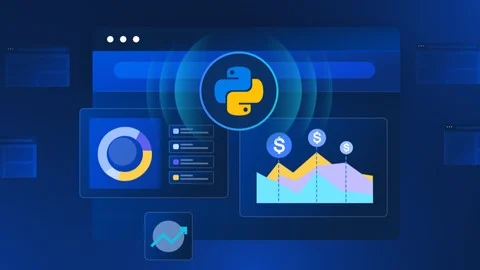
The global markets of 2026 are run by math and code. If you want to work as an analyst, knowing the basics of finance is just the first step. The CFA Institute pushed for a change to reflect this reality. Today, the CFA level 1 syllabus includes Python and data visualization as core components. This move helps anyone with the charter handle the high-speed data demands of a 2026 investment firm.
Financial analysts used to spend most of their day inside Excel spreadsheets. While spreadsheets still have a place, they struggle with the volume of data generated in 2026. A single day of market activity produces millions of data points that can crash traditional software. By adding Python to the mix, the Institute ensures that new candidates can handle these heavy loads. Python offers a way to automate repetitive tasks and find trends that would take a human days to spot manually. This shift toward tech-literacy is a response to what top-tier firms now demand from their junior hires.
Modern Finance Demands More Than Spreadsheets
The scale of info for investors has jumped. By 2026, trades rely on data like tracking cargo ships or parking lot traffic from space. Standard math cannot keep up with this much work. This is why the CFA course subjects now include these technical skills. Knowing how to code is a requirement for everyone. If you want a job in portfolio management today, you need these tools to be useful.
Python as the New Language of Investment Analysis
The introduction of Practical Skills Modules (PSMs) marks a turning point for the CFA level 1 syllabus. These modules move away from the “memorize and repeat” style of learning. Instead, they force candidates to apply what they know in a digital environment. Python is the backbone of these modules because it integrates so well with other financial tools. In 2026, a candidate might use Python to backtest a trading strategy or to run a Monte Carlo simulation. These tasks are standard in modern investment banks, so learning them during the certification process makes perfect sense.
Making Information Visual for Stakeholders
Data visualization is the other half of this technical update. It is one thing to find a pattern in a million rows of data, but it is another thing to show that pattern to a client. The CFA course subjects now teach how to turn complex datasets into clear, interactive visuals. In 2026, clients and senior partners do not want to see a wall of numbers. They want to see the “why” behind an investment recommendation through heat maps, scatter plots, and interactive dashboards.
Effective visualization helps in spotting outliers and correlations that might stay hidden in a table. For example, a visual chart can show how a specific stock price moves in relation to interest rate changes over a twenty-year period in a way that is immediately obvious. Tools like Matplotlib or Seaborn are now part of the toolkit for CFA candidates. This ensures that the next generation of analysts can communicate their findings as well as they can calculate them. Clear communication of data-driven insights is a top priority for firms in 2026.
Why the Industry Pushed for This Change
The change to the CFA level 1 syllabus did not happen in a vacuum. The CFA Institute conducts regular surveys of employers to see what skills are missing in new hires. For several years, the feedback was clear: candidates knew the math, but they did not know how to apply it using modern technology. By 2026, the gap between academic finance and professional finance had grown too wide. Integrating Python and data visualization was the bridge needed to close that gap.
Employers in 2026 value the “T-shaped” professional. This is someone who has deep knowledge in one area (finance) but a broad set of skills in others (technology and communication). If you can calculate the Weighted Average Cost of Capital (WACC) but cannot build a dynamic model to show how it changes under different scenarios, your utility to a firm is limited. The new curriculum ensures that the CFA charter remains a signal of both deep financial knowledge and modern technical capability.
Integrating Tech with Traditional Financial Theory
It is a mistake to think that the core of the program has disappeared. The CFA course subjects still cover Ethics, Economics, and Financial Statement Analysis with the same rigor as before. The Python and data visualization components are meant to support these areas, not replace them. For instance, instead of just reading about probability distributions, a candidate might write a script to visualize one. This hands-on approach helps the concepts stick and makes the learning process more active.
Practical Skills Modules now form a part of the testing process in 2026. While the multiple choice portion remains, your final results stay hidden until you complete the practical work. This shift means that every successful candidate can handle basic scripts. It builds a more technical workforce. For those in tech roles wanting a career change, the CFA course subjects now feel more relevant to their existing talents.
Preparing for the New CFA Level 1 Standards
Preparing for these updates requires a shift in how candidates study. You can no longer rely solely on reading textbooks and taking practice tests. You need to spend time in a coding environment. Fortunately, the 2026 study materials provide plenty of support for beginners. You do not need to be a software engineer to pass these sections. The goal is “financial programming,” which is a specific subset of coding focused on data and math.
The CFA level 1 syllabus provides a structured path to learn these skills from scratch. It starts with basic syntax and moves into data manipulation and visualization. Most candidates find that once they get past the initial learning curve, Python actually makes the financial concepts easier to grasp. Seeing a formula come to life in a script provides a different level of clarity than just seeing it on a page. This practical experience is what sets the 2026 candidate apart from those who came before.
The Future of the Investment Profession
Looking ahead, the role of the financial analyst will continue to merge with that of the data scientist. The updates we see in 2026 are just the beginning. As machine learning and artificial intelligence become even more integrated into the market, the ability to interact with these systems will be the primary job of the analyst. The CFA course subjects are evolving to keep pace with this reality. Staying relevant means staying current with these tools.
By mastering Python and data visualization now, you are future-proofing your career. The investment industry rewards those who can adapt. In a world where data is the most valuable commodity, the people who can mine it, analyze it, and present it will always be in demand. The CFA Institute’s decision to mandate these skills is a clear sign of where the industry is headed. It is an exciting time to enter the field, provided you are willing to learn the new language of finance.


Introduction
The term Hundurs may appear unfamiliar at first glance, but it carries interesting meanings depending on context, language, and usage. Whether you encountered it online, in a name, or in a specific niche, understanding Hundurs requires exploring its linguistic roots, possible interpretations, and how it is used today.
What Does Hundurs Mean?
“Hundurs” does not have a single universally recognized definition in English. Instead, it appears to be:
- A variation or derivative of a word from another language
- A name or username used on digital platforms
- A brand or coined term in niche communities
Because of this flexibility, the meaning of “Hundurs” often depends on where and how it is used.
Possible Linguistic Origins
1. Scandinavian Influence
The word “Hundur” in Icelandic translates to “dog.” The addition of “-s” could indicate possession or plurality, making “Hundurs” loosely interpreted as “of the dog” or “dogs.” This connection suggests that the term may have roots in Nordic languages.
2. Germanic Language Connection
In German, “Hund” means “dog.” Variations like “Hunds” or “Hunders” can appear in older or dialectal forms. “Hundurs” may be a stylized or modified version influenced by these linguistic traditions.
Use of Hundurs Online
In modern digital spaces, unique words like “Hundurs” are often used as:
1. Usernames and Gamertags
Gamers and social media users frequently create distinctive names. “Hundurs” fits this trend because it is short, memorable, and uncommon.
2. Brand Names
Startups and small businesses sometimes adopt unique or invented words to stand out. “Hundurs” could easily serve as a brand name for:
- Pet-related businesses
- Tech startups
- Creative agencies
3. Creative Writing and Fiction
Writers and creators often invent words for fictional worlds. “Hundurs” could be used as:
- A character name
- A place or kingdom
- A species in fantasy settings
Why Unique Words Like Hundurs Matter
In today’s digital world, originality is valuable. A term like “Hundurs” offers several advantages:
- Search Engine Visibility: Less competition makes it easier to rank online
- Brand Identity: Unique names are easier to trademark and remember
- Creative Freedom: No fixed meaning allows flexible interpretation
SEO and Digital Relevance
From an SEO perspective, “Hundurs” is a low-competition keyword, making it ideal for:
- Niche blogs
- New websites
- Branding experiments
If you are building a website or online presence around this keyword, you can shape its meaning and authority over time by publishing relevant, high-quality content.
How to Use Hundurs Effectively
If you plan to use “Hundurs” for a project, consider these tips:
1. Define Its Meaning
Since the word is flexible, give it a clear identity. For example:
- A pet brand → Focus on dogs and animal care
- A tech brand → Associate it with innovation
2. Build Content Around It
Create articles, blogs, or social media posts that consistently use the term to establish recognition.
3. Design a Strong Brand Image
Pair the name with a logo, color scheme, and message that reflects your purpose.
Potential Ideas for Hundurs
Here are a few creative directions:
- Hundurs Pet Care: A blog or business focused on dog health and training
- Hundurs Gaming: A gaming channel or esports identity
- Hundurs Studio: A creative design or media agency
- Hundurs World: A fantasy storytelling platform
Conclusion
“Hundurs” is a versatile and unique term with potential roots in European languages and modern digital creativity. While it may not have a fixed definition, its strength lies in its flexibility. Whether used as a brand, username, or creative concept, “Hundurs” can be shaped into something meaningful and memorable.
In a world where originality is key, adopting a distinctive term like “Hundurs” can help you stand out and build a strong identity—online or offline.
Introduction to SyncGrades
Education has undergone a massive transformation in the past decade, especially with the rise of digital tools designed to make learning more efficient and accessible. One concept that fits perfectly into this evolution is SyncGrades. As the name suggests, SyncGrades refers to the process or platform of synchronizing academic grades, performance records, and student progress across multiple systems and stakeholders.
Traditionally, managing grades involved manual processes such as paper records, spreadsheets, or disconnected software systems. These methods often created challenges for teachers, students, and administrators who needed accurate and up-to-date academic information. SyncGrades represents a modern solution that allows educational institutions to keep grades organized, updated, and easily accessible.
The importance of systems like SyncGrades has grown even more with the expansion of online learning and digital classrooms. Schools, universities, and training centers now rely heavily on technology to manage academic data. By synchronizing grades across platforms, SyncGrades helps ensure that everyone involved in the educational process has access to consistent and reliable information.
The Concept Behind SyncGrades
The main idea behind SyncGrades is integration and real-time data management. In many educational environments, information about student performance is stored in different systems. For example, teachers may record grades in one application while administrators manage student records in another. Without synchronization, these systems can easily become inconsistent.
SyncGrades solves this problem by connecting different platforms and ensuring that grade data is updated automatically across all relevant systems. When a teacher updates a student’s grade in one location, the change is reflected everywhere else where that information is needed. This eliminates duplication and reduces the risk of errors.
Another key aspect of the SyncGrades concept is transparency. When grades are synchronized across platforms, students and parents can access accurate progress reports without waiting for periodic updates. This real-time visibility allows everyone involved to stay informed and respond quickly if academic performance needs improvement.
Why SyncGrades Is Important in Modern Education
Education systems today are more complex than ever. Students often participate in multiple courses, extracurricular activities, and online learning programs simultaneously. Managing academic performance in such an environment requires reliable digital infrastructure.
SyncGrades plays an important role in improving efficiency for educators. Teachers spend a significant amount of time recording and updating grades, preparing reports, and responding to student inquiries. A synchronized system reduces administrative work, allowing educators to focus more on teaching and mentoring students.
Another major advantage of SyncGrades is accuracy. Manual grade management increases the risk of mistakes, especially when data must be entered multiple times across different platforms. Automated synchronization ensures that grades remain consistent and correct, which is essential for maintaining trust within the academic system.
Finally, SyncGrades supports better communication. Students, parents, teachers, and administrators all rely on grade information to make decisions about learning strategies, course selections, and academic support. Having synchronized data ensures that everyone works with the same information.
Key Features of a SyncGrades System
A well-designed SyncGrades platform would include several features that enhance its usefulness and efficiency. These features focus on automation, accessibility, and data security.
One important feature is real-time synchronization. Instead of waiting for periodic updates, grades would automatically update across connected platforms as soon as changes are made. This ensures that information remains current and reliable at all times.
Another essential feature is cross-platform integration. Educational institutions often use multiple digital tools such as learning management systems (LMS), student information systems (SIS), and communication platforms. SyncGrades should be able to integrate with these systems seamlessly so that data flows smoothly between them.
User accessibility is also a key component. Students and parents should be able to access grade information through secure online portals or mobile applications. Easy access to performance data encourages students to take responsibility for their learning and stay motivated.
Benefits of SyncGrades for Teachers
Teachers are among the biggest beneficiaries of systems like SyncGrades. Managing academic records can be time-consuming, especially when dealing with large numbers of students. SyncGrades simplifies this process by automating many of the tasks that teachers previously handled manually.
One major advantage is time savings. Teachers can enter grades once, and the system automatically updates all connected platforms. This eliminates the need for repetitive data entry and reduces administrative workload.
Another benefit is better organization. SyncGrades systems often include tools for tracking assignments, attendance, and student progress. Having all this information in one place makes it easier for teachers to monitor performance and identify students who may need additional support.
Finally, synchronized grading systems improve communication between teachers and students. When students can see their grades and feedback in real time, they are more likely to engage with the material and seek help when necessary.
Benefits of SyncGrades for Students and Parents
Students and parents also gain significant advantages from a synchronized grading system. One of the most important benefits is transparency. When grades are updated instantly and accessible online, students always know where they stand academically.
This visibility encourages accountability. Students can monitor their progress and identify areas where they need to improve. Instead of waiting for report cards or end-of-term evaluations, they can take action immediately to address challenges.
Parents benefit from improved insight into their child’s academic performance. With access to synchronized grade reports, they can stay informed about assignments, test results, and overall progress. This allows them to support their children more effectively and communicate with teachers when necessary.
Challenges and Considerations in Implementing SyncGrades
Although SyncGrades offers many advantages, implementing such systems requires careful planning. Educational institutions must consider factors such as data security, compatibility with existing platforms, and user training.
Data security is one of the most important concerns. Academic records contain sensitive information, so systems must include strong encryption and access controls. Protecting student privacy should always be a top priority when managing digital educational data.
Another challenge is system integration. Schools and universities often use different software systems that were not originally designed to work together. SyncGrades platforms must be flexible enough to connect with these existing tools without disrupting established workflows.
Training and adoption are also essential for success. Teachers, administrators, students, and parents need clear instructions on how to use the system effectively. Proper training ensures that everyone can benefit from the platform’s features.
The Future of SyncGrades in Education
The future of education is increasingly digital, and systems like SyncGrades will likely play a major role in shaping how academic performance is managed. As technology continues to evolve, these platforms will become more advanced and integrated.
Artificial intelligence may enhance SyncGrades systems by providing predictive insights into student performance. For example, AI tools could analyze grade trends and identify students who might need extra support before problems become serious.
Mobile accessibility will also continue to improve. Students and parents increasingly rely on smartphones and tablets for accessing information. Future SyncGrades platforms will likely offer more intuitive mobile applications with advanced features.
Additionally, educational institutions may integrate SyncGrades with broader digital learning ecosystems. This integration could include personalized learning tools, performance analytics, and collaborative educational platforms that support both teachers and students.
Conclusion
SyncGrades represents a powerful concept in the modernization of academic management. By synchronizing grade data across multiple platforms, it simplifies administrative processes, improves accuracy, and enhances communication between teachers, students, and parents.
In an era where education increasingly relies on digital technology, systems like SyncGrades provide the infrastructure needed to manage academic performance efficiently. They allow educators to focus more on teaching while giving students and parents greater insight into learning progress.
As educational institutions continue to adopt advanced technologies, the importance of synchronized data systems will only grow. SyncGrades stands as an example of how thoughtful digital solutions can improve both the educational experience and the management of academic information.

Microsoft Dynamics Implementation Services for Digital Business Growth in UAE

Eclipse Blinds: Transforming Homes with Stylish Window Treatments in Knoxville TN

The Variable Sample Size Problem: Why RADV Audits Are Harder to Predict Than Ever

هنتاوي.com: A Guide to Safe and Responsible Online Browsing

How to buy Steroids with Credit Card?
